ByJohn A
Maintaining Consistent Environmental Conditions for Product Evaluation
Products are often developed to operate under environmental conditions that differ considerably from those found inside a laboratory. Electronic devices may encounter humid storage environments, industrial components can experience temperature fluctuations, and packaging materials may need to remain stable during transportation. Understanding how products respond to these conditions is essential for manufacturers that want to improve reliability and maintain consistent quality.
Temperature and humidity are particularly important because they can influence material properties, electrical performance, corrosion behavior, and dimensional stability. Testing products under controlled environmental conditions allows engineers to investigate these effects before they become problems during normal use.
A reliable environmental testing process requires suitable equipment, clear test procedures, and consistent monitoring. Selecting the right chamber is therefore an important decision for laboratories, research teams, and quality-control departments.
Why Temperature and Humidity Control Matter
Temperature and humidity can affect products independently or interact with one another. High humidity may encourage corrosion in susceptible metals, influence moisture absorption in polymers, and affect certain electronic components. Temperature changes can alter material dimensions, accelerate chemical reactions, and influence how moisture moves through a product.
These effects may develop gradually or appear after repeated exposure. For example, a coating may lose adhesion after moisture penetrates the surface, while a hygroscopic material may expand as it absorbs water from the surrounding air. Electronic assemblies may also experience reliability problems when moisture and temperature interact with sensitive components.
Controlled testing helps manufacturers understand these potential risks. By setting defined temperature and relative humidity conditions, laboratories can expose specimens to repeatable environments and assess their responses systematically.
This information can support material selection, product development, quality assurance, and investigations into unexpected failures. It can also help teams compare different product formulations under the same test conditions.
How Environmental Chambers Support Controlled Testing
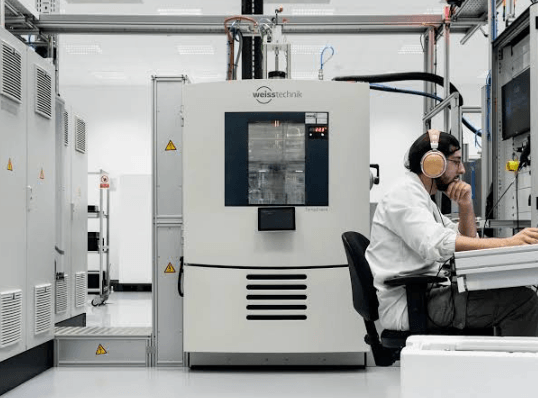
A temperature and humidity chamber creates a controlled internal environment for testing products and materials. Depending on its design, the equipment uses heating, cooling, humidification, and moisture-removal systems to maintain specified operating conditions.
The chamber controller regulates the selected settings, while sensors monitor environmental conditions inside the working space. More advanced configurations may support programmed sequences, data recording, alarms, and communication with external monitoring systems.
Temperature regulation
Temperature control allows laboratories to expose products to selected thermal conditions. Some tests require a stable temperature over an extended period, while others involve repeated transitions between warmer and colder settings.
The required temperature range depends on the intended application. Electronics, polymers, packaging materials, and industrial components may have different qualification requirements, so equipment should be selected according to the actual test procedure.
Temperature stability and uniformity are also important. The controller’s displayed value may not represent every location inside the chamber equally, particularly when specimens are arranged incorrectly or airflow is restricted.
Relative humidity control
Relative humidity describes the amount of water vapor in the air relative to the maximum amount the air can hold at a given temperature. It is an important parameter when testing materials that absorb moisture or products that may be affected by condensation.
A chamber can help laboratories maintain a specified humidity level during exposure. The required range and control accuracy depend on the material, test standard, and purpose of the experiment.
Because temperature and relative humidity are related, changes in temperature can influence the moisture conditions within the chamber. A suitable testing procedure should therefore define both parameters and explain how they will be monitored.
Programmable environmental cycles
Some products need to undergo a sequence of different environmental conditions rather than remain at a single setting. Programmable controllers can help laboratories establish a repeatable sequence of temperature and humidity stages.
For example, a procedure may include a stabilization period, a humid exposure stage, and a subsequent change in temperature. The exact sequence must follow the relevant test requirements rather than a generic cycle.
Automated programming reduces repetitive manual adjustments and helps laboratories document the intended exposure profile.
Industries That Use Temperature and Humidity Testing
Environmental testing is relevant to a wide range of industries because many materials and components respond to changes in heat and moisture.
Electronics and electrical manufacturing
Electronic assemblies can be sensitive to moisture, particularly when conductive materials, exposed contacts, or moisture-sensitive components are involved. Environmental exposure may contribute to corrosion, leakage currents, insulation problems, or other performance changes.
Testing can help manufacturers evaluate circuit boards, connectors, sensors, switches, and electronic modules under specified conditions. Monitoring product functionality during or after exposure can reveal weaknesses that may not be apparent during ordinary room-temperature inspection.
The appropriate test conditions depend on the product design and qualification requirements. Laboratories should identify applicable standards before selecting the temperature, humidity level, and exposure duration.
Automotive components
Automotive products may encounter humid climates, cold storage conditions, and substantial temperature changes during their service life. Electrical connectors, control modules, plastic housings, seals, and other components may require environmental evaluation.
Controlled testing can help engineers investigate moisture-related deterioration, dimensional changes, and performance variations. It may also support comparisons between alternative materials or suppliers.
For components with demanding safety or reliability requirements, chamber testing should be integrated into a broader verification program that includes any other necessary environmental and functional tests.
Pharmaceuticals and packaging materials
Temperature and humidity can influence certain packaging materials and products stored within them. Paper-based packaging may absorb moisture, while some polymers can change dimensions or barrier properties under different environmental conditions.
Controlled exposure helps manufacturers evaluate packaging stability and determine whether materials remain suitable for their intended storage and transportation environments.
Pharmaceutical stability testing has specific regulatory and procedural requirements. A chamber must be selected and qualified according to the intended study rather than assumed suitable solely because it can control temperature and humidity.
Plastics, textiles, and construction materials
Many non-metallic materials absorb moisture or respond to changes in temperature. Textiles may change dimensions, plastics can exhibit altered mechanical properties, and construction materials may experience moisture-related expansion or surface deterioration.
Environmental testing allows researchers to compare materials under repeatable conditions and observe whether exposure produces changes in appearance, dimensions, strength, or other relevant properties.
The test method should match the material’s expected use and the property being evaluated.
What to Consider When Choosing a Chamber Supplier
Selecting a supplier involves more than comparing equipment prices. Laboratories need to confirm that the proposed chamber can meet their technical requirements and support their testing activities over time.
Required temperature and humidity ranges
Begin by listing the minimum and maximum temperature and relative humidity conditions required by the planned tests. Consider whether the chamber must maintain stable conditions, perform programmed cycles, or recover quickly after a door opening.
Review the manufacturer’s stated operating limits and control specifications. A wide operating range is useful only if the equipment can also achieve the stability and uniformity required by the application.
Chamber capacity and specimen loading
The working space should accommodate the largest expected specimens, fixtures, and any necessary measurement devices. Enough clearance must remain around the samples to support appropriate airflow.
Overloading the chamber may create uneven conditions and make results less representative. Conversely, selecting an unnecessarily large system can consume additional laboratory space and operating resources.
A supplier should be able to help clarify the relationship between specimen size, loading arrangements, and the usable working volume.
Control systems and data management
Testing may require more than maintaining a setpoint. Laboratories may need programmable cycles, alarms, temperature and humidity records, or data export for quality documentation.
Before purchasing, confirm which functions are included and whether additional software or communication hardware is required. Data access can be particularly important when test results must be reviewed, compared, or retained for audits.
See also: How Acquaint Builds Hotel Booking Engines: Process, Tech Stack, and Delivery Model
Calibration, service, and technical support
Environmental chambers depend on sensors, control systems, and mechanical components that require appropriate inspection and maintenance. Calibration and performance verification help laboratories determine whether measured conditions remain suitable for their testing requirements.
Ask about recommended maintenance intervals, technical support, replacement parts, and service arrangements. Clear documentation can help reduce downtime and support consistent operation.
Manufacturers assessing available options can review a LIB industry constant temperature and humidity chamber supplier to determine whether the equipment range and support arrangements fit their laboratory requirements.
Best Practices for Reliable Environmental Testing
Even suitable equipment requires careful preparation to produce meaningful results. Before testing, each specimen should be identified, inspected, and documented. The test plan should define the target temperature, relative humidity, exposure duration, measurement method, and acceptance criteria.
Samples should be arranged so that airflow is not unnecessarily obstructed. If multiple specimens are tested together, their placement should be consistent with the test procedure. Sensors used to verify specimen conditions should be positioned appropriately and should not interfere with the exposure process.
Laboratories should also confirm that the chamber has reached the required conditions before starting any timed exposure period specified by the test method. Recording the environmental profile helps technicians identify deviations and determine whether a test needs to be repeated.
After exposure, samples should be handled according to the procedure. Some tests require a defined recovery period before measurements are taken, while others involve monitoring product behavior during exposure.
Finally, calibration and maintenance records should be kept up to date. Routine checks of seals, sensors, humidification components, and general chamber condition can help identify problems before they compromise testing.
Frequently Asked Questions
1. What is a constant temperature and humidity chamber used for?
It provides a controlled environment for evaluating how products and materials respond to specified temperature and relative humidity conditions. Common applications include electronics testing, material research, packaging evaluation, and product quality assurance.
2. Why are temperature stability and humidity uniformity important?
They help ensure that specimens experience conditions consistent with the test procedure. Significant variations within the chamber may influence sample behavior and make comparisons between experiments less reliable.
3. How should a laboratory choose the right chamber capacity?
Consider the dimensions of the largest specimens, the number of samples tested together, the required fixtures, and the space needed for airflow. The working volume should suit the actual test arrangement rather than the sample dimensions alone.
Conclusion
Controlled temperature and humidity testing helps manufacturers investigate how environmental conditions influence products, materials, and components. It supports product development, quality assurance, and reliability assessment across electronics, automotive manufacturing, packaging, and material research.
The most suitable chamber depends on the required environmental range, stability, uniformity, working capacity, programming features, and maintenance support. By defining test requirements before purchasing equipment and following consistent procedures during operation, laboratories can obtain more useful results and make better-informed decisions about product performance.